Barlia
From Industrial Site to Residential Neighbourhood
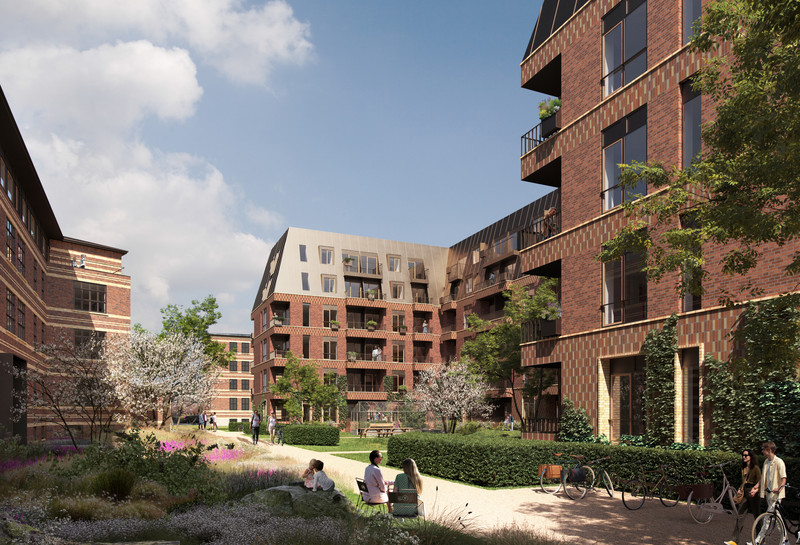
Approximately 30 decares are being transformed from an industrial site into a residential area with 80 new homes in Barliveien. The site sits in a sheltered landscape, framed by water and forest, yet with short walking distances to the light rail and local centre. The area offers excellent opportunities for outdoor recreation—not only for future residents, but also for the wider neighbourhood.
A Gentle Approach to Nature
The natural qualities of Barlia became a central element in the design concept. A key focus of the project is to repair the scars and interventions left by previous industrial use, while also protecting and strengthening the site’s biodiversity. The development aims to become a considerate neighbour that contributes positively to its surroundings. Transformation can reduce climate impact and reinforce a place’s identity by repairing and complementing what is already there. In this way, the area is strengthened into a socially and environmentally sustainable neighbourhood by:
• Restoring damaged terrain and natural environments on the site
• Complementing the range of housing types, meeting places and shared functions
• Transforming selected existing structures and reusing building components
Strengthening Local Identity
The development will be dense and low-rise to create varied outdoor spaces. This encourages interaction between residents and their surroundings, supporting activity and social connection. The architectural expression will be clear yet diverse, reinforcing the identity of the place. Indoor facilities are also planned to benefit the wider community, including a café, small grocery store, and shared office space for maintenance staff or local volunteers.
Reuse potential
To secure greenhouse gas reductions early in the project, a reuse assessment was carried out on the existing commercial buildings scheduled for demolition, on outdoor stored materials, and on the project’s planned excavated masses. The reuse potential was presented in a report, and the associated climate-saving opportunities were integrated into the greenhouse gas analyses. This approach raises awareness of resources hidden in existing structures, shifting the view from waste to value, while highlighting the importance of circular material management for effective emission reductions.



Read more
Want to know more about the project?